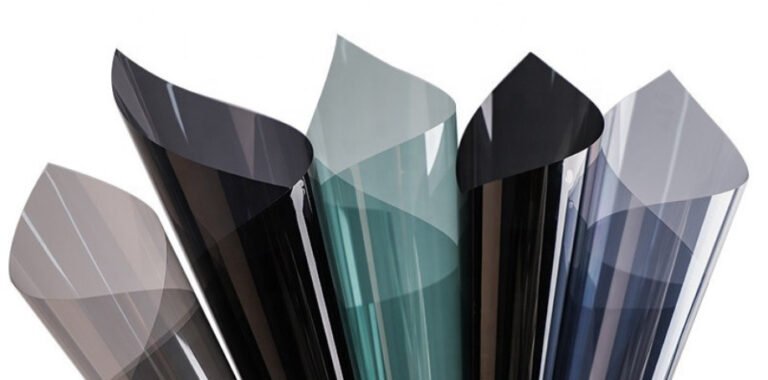
Rayno Phantom S5, S7 and S9 are three grades of the same nano carbon ceramic film. All three block up to 99.9% of UV and resist fading. The difference is heat: as you move from S5 to S9, the film rejects more infrared, with Phantom S9 reaching up to 93%. Choose by how much heat you want kept out.
If you’re unsure which Phantom grade to choose, this guide explains what changes between the three films, what stays the same, and how to match a grade to the way you drive in Perth.
What do Phantom S5, S7 and S9 have in common?
The three films share the same platform, so you aren’t choosing between a good film and a poor one.
- **Construction:** all three are nano carbon ceramic films. They’re dye-free and metal-free, so the colour doesn’t wash out and there’s no metal layer to interfere with phone, GPS or radio signals.
- **UV protection:** every grade blocks up to 99.9% of UV, which matters for your skin and for dashboards, seats and trims.
- **Colour stability:** the manufacturer rates fading at under 1% across the range.
- **Shades:** each grade comes in the same spread of darkness, from 5% to 50% visible light transmission (VLT), so you can run S5, S7 or S9 at a WA-legal shade.
- **Low reflection:** the films have a natural, non-mirrored look, with reflectance sitting well under the 10% that WA allows.
So if UV protection is your main concern, even the entry grade does the job. The reason to step up is comfort in the heat.
How do S5, S7 and S9 compare on heat?
Two numbers tell the story. Infrared (IR) rejection is how much of the heat-carrying part of sunlight the film stops. Total solar energy rejected (TSER) is the broader measure of all the solar energy kept out, including visible light and UV.
The figures below are the manufacturer’s published specifications for the two shades most Perth drivers use: 35% on the front side windows and 20% on the rear (the rear limit applies to cars with exterior mirrors on both sides).
| Film | IR rejection at 35% | TSER at 35% | IR rejection at 20% | TSER at 20% |
|---|---|---|---|---|
| Phantom S5 | 53% | 51% | 53% | 51% |
| Phantom S7 | 70% | 54% | 73% | 58% |
| Phantom S9 | 92% | 58% | 93% | 64% |
You can see the full table for every shade on the window tinting page.
Why does IR rejection jump so much more than TSER?
TSER includes visible light, and visible light is set mostly by the shade you choose, not the grade. A 35% film lets through roughly the same amount of light whether it’s S5 or S9. What the higher grades do differently is filter the invisible infrared, which is the part you feel as heat on your arm or the back of your neck. That’s why IR rejection climbs steeply from S5 to S9 while TSER rises more gently.
Will I actually feel the difference?
In mild weather, maybe not much. On a 40-degree afternoon with the sun streaming through the side glass, a higher IR figure is noticeable, especially on the front windows. Those have to stay at 35% or lighter, so the film’s grade is doing more of the work there than darkness can.
Which Phantom grade suits which driver?
There’s no single right answer, but the way you use the car points to a sensible starting point.
Phantom S5: the everyday upgrade
S5 suits drivers who want a real step up from basic dyed tint without chasing maximum heat rejection. Think of a second car that does short trips, or a commuter that’s mostly parked undercover.
Phantom S7: the middle ground
S7 makes sense for cars that spend a lot of time on the road in daylight. School runs, long commutes up the Mitchell or down the Kwinana Freeway, or a work vehicle that sits in an open car park all day. You get a clear lift in IR rejection over S5.
Phantom S9: for maximum comfort
S9 is the top of the range and the one to consider if heat is your main complaint. It suits dark-coloured cars, vehicles with large glass areas, people who drive through the middle of the day, and anyone with kids or pets in the back seat. It’s also worth a look if you’d like to keep the front windows lighter for night driving but still want strong heat control.
Does a higher grade mean darker tint?
No, and this is the most common mix-up. The number after the grade (S9-35, for example) is the shade. The S5, S7 or S9 part is the film’s performance level. An S9-35 and an S5-35 look almost identical in darkness; the S9 simply stops far more heat.
This matters in WA because shade is regulated and grade isn’t. Under the WA Department of Transport window tinting bulletin, front side windows need at least 35% VLT. Rear side windows and the rear windscreen can go to 20% VLT, as long as the vehicle has exterior mirrors on both sides. The windscreen itself can only have a tinted band across the top. Any of the three grades can be fitted within those limits. For a fuller explanation, see our guide to window tinting laws.
Can you mix grades on one car?
Nothing stops you mixing grades, since the films share the same look. One approach is to put the higher grade on the front side windows, where the legal shade is lighter and heat control relies more on the film itself, and a lower grade on darker rear glass. Others prefer the same grade all round so every window performs evenly. It’s a fair question to raise when you get a quote, so you can compare both options for your car.
What affects the cost of each grade?
Price rises with the grade, but the film is only part of it. The final figure also depends on:
- the size and number of windows on your vehicle
- curved or complex glass, such as a steep rear windscreen
- whether old tint needs to be removed first
The fairest way to compare is to get a quote for your exact car with two grades side by side.
How long does Phantom tint last?
Phantom is a premium film, and Trident’s premium films carry a lifetime warranty against peeling, bubbling and fading. The dye-free construction means the colour shouldn’t turn purple or brown with age. Fitting takes most cars two to four hours. Afterwards, keep the windows up for three to five days so the film can cure, and clean with ammonia-free products. If you’d like to understand the science behind the film, read how ceramic window tint works.
Frequently asked questions
Is Phantom S9 worth it over S7?
If heat is your main concern, often yes. At the legal 35% front shade, S9 is rated at 92% IR rejection against S7’s 70%. If you mostly drive early or late in the day, or park undercover, S7 may be plenty.
Do all three grades block the same UV?
Yes. S5, S7 and S9 all block up to 99.9% of UV, so your skin and interior get the same protection whichever grade you choose.
Will Phantom tint affect my phone or GPS?
No. The films are metal-free, so they don’t block mobile, GPS or radio signals the way some metallised films can.
Is Phantom S9 darker than S5?
Not at the same shade number. Darkness is set by the shade (such as 35% or 20%), not the grade. S9 rejects more heat at the same level of darkness.
Where can I see how the shades look on a car?
Our ceramic tint page explains the range, and the our work gallery shows finished cars, which gives you a feel for how different shades look on different paint colours.
Choose your Phantom grade
If you’re weighing up two grades, a side-by-side quote is the easiest way to decide. Visit Trident Car Care at 45 Berriman Drive, Wangara or Unit 6/1780 Albany Highway, Kenwick, or call 0482 689 885 for a quote on Phantom S5, S7 or S9 for your car. You can also contact us online.