In WA, a Toyota HiLux can have tint down to 35% VLT on the front door windows and 20% on the rear door windows and rear windscreen, provided it has exterior mirrors on both sides. Reflectance must stay at or below 10%, and the windscreen can only be tinted in the top band.
The HiLux is one of the most common vehicles on Perth roads, and it works hard: school runs one day, a site in the hills the next, a trip up the coast on the weekend. That mix is exactly why choosing a legal shade and the right film for one matters.
What are the WA tint limits for a HiLux?
The rules are set by the WA Department of Transport and are summarised in its window tinting information bulletin. Here’s how they apply window by window on a HiLux:
| Glass | Minimum VLT (visible light transmission) | Notes |
|---|---|---|
| Windscreen | Top band only | No tint across the main viewing area |
| Driver and front passenger windows | 35% | Measured through the glass and film together |
| Rear door windows (dual cab) | 20% | Requires exterior mirrors on both sides |
| Rear windscreen | 20% | Requires exterior mirrors on both sides |
On every window, the film’s reflectance can’t exceed 10%, so mirror-finish films are out. Trident fits WA-legal shades. For the wider picture, including how the rules compare across the country, see our page on window tinting laws in Australia.
Why can a 35% film end up too dark?
The legal figure applies to the glass and film together, not the film on its own. Factory glass on most cars already blocks some light, so putting a 35% film on it gives a combined reading below 35%.
As a rough example, glass that lets through 80% of light, paired with a 35% film, works out at around 28% overall, which is under the front limit. That’s why front windows usually need a lighter film than the number on the legal limit suggests. Our article on whether your tint is legal in WA explains how tint is measured and what happens if it’s too dark.
Which HiLux do you have?
The amount of glass, and where it sits, changes a lot between body styles.
Single cab and extra cab
These have far less glass behind the driver than a dual cab. The rear windscreen does most of the work of keeping sun off your neck, and the front door windows are the ones that make the biggest difference to glare on the drive home.
Dual cab
Four doors plus the rear windscreen. If the back seat carries kids, a dog or a work crew, rear tint makes the cab far more comfortable on a summer afternoon and keeps tools and bags on the seat out of plain view.
Cab-chassis with a tray
The rear windscreen looks onto a headboard and whatever is on the tray, so many owners rely on their mirrors and reversing camera more than the view through the back. Others tow at night and prefer a lighter rear shade. Both are reasonable, as long as the shade stays within the rear limit.
Canopies
Many work utes carry a canopy with side windows. Canopy glass isn’t part of the cab, and how the rules apply can depend on the setup, so check the Department of Transport guidance before going dark on it.
Does factory glass change the shade you can use?
Yes. Depending on the grade and model year, some rear glass may already be darker from the factory. Adding film over factory-tinted glass multiplies the effect, so a film that looks light on the sample card can push the combined reading below the 20% rear limit that applies to a vehicle with exterior mirrors on both sides. Front door glass is normally much lighter, but as the example above shows, it still counts. Having the glass measured before choosing a film avoids surprises.
Ceramic, carbon or dyed film for a work ute?
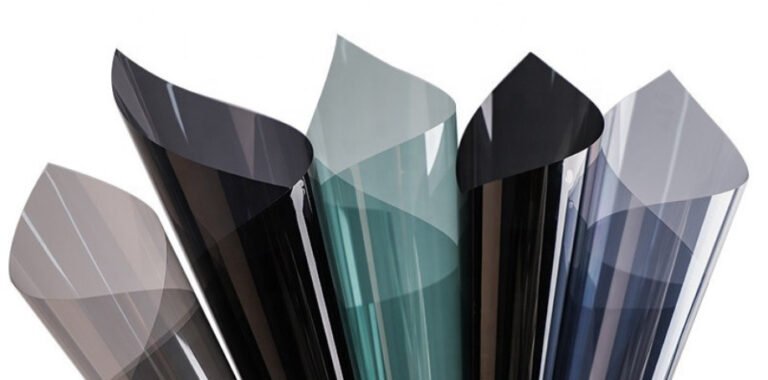
Trident offers ceramic, carbon and dyed films, including Rayno Phantom nano carbon ceramic film in S5, S7 and S9 grades. Here’s how the film types generally compare for a ute:
- Dyed film mainly reduces glare and adds privacy. It’s the simplest option but rejects less heat than the others.
- Carbon film gives a matte, non-reflective look and better heat rejection than dyed film, without metal that could affect signals.
- Ceramic film rejects the most heat at a given shade, which is what you feel when you open the door after a day parked on site.
Rayno Phantom films offer up to 99.9% UV rejection and are dye-free and metal-free, with fading under 1%. The S9 grade reaches up to 93% infrared rejection, the part of sunlight you feel as heat. Being metal-free also means no interference with phones, GPS or radio, which matters if the ute is your office. You can read more about the range on our ceramic tint page.
Dust, mud and the first few days
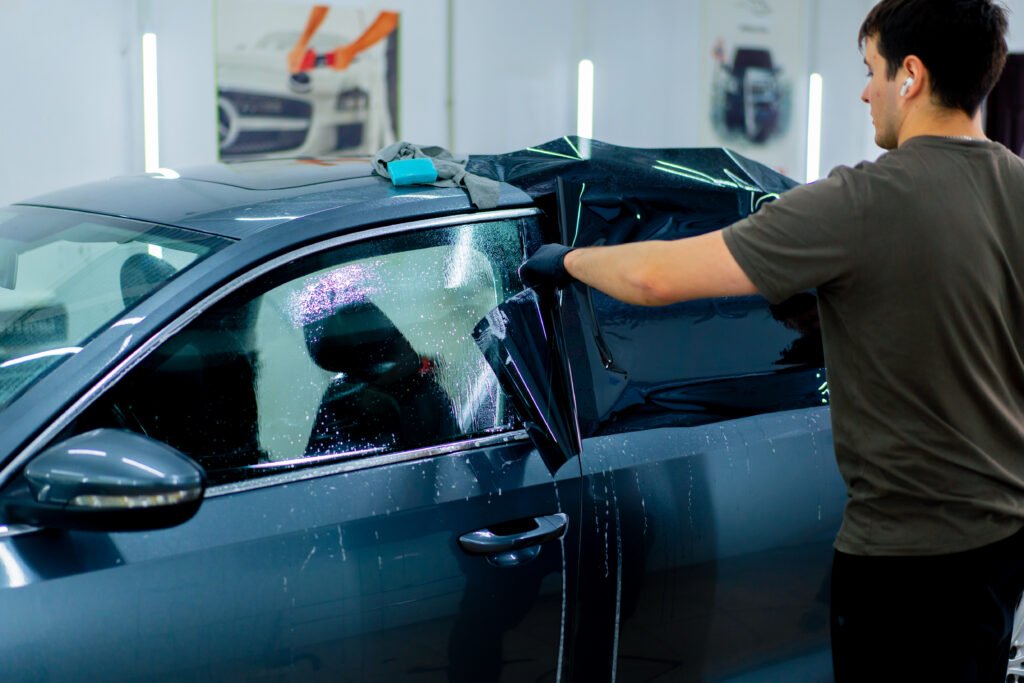
Most cars take 2-4 hours to tint. Afterwards, keep the windows up for 3-5 days while the film cures. On a ute that’s the awkward part: plan around site gate intercoms, drive-throughs and tip passes, and use the door rather than the window for that week.
Once the film has cured, clean the inside of the glass with an ammonia-free cleaner. Red dust and grit are abrasive, so wipe tinted glass with a clean, damp microfibre rather than a dry rag that has been rolling around the floor.
Buying a second-hand HiLux with old tint?
Used utes often come with film that has turned purple, bubbled or been fitted darker than WA allows. Old tint can be removed and replaced with a legal film, which also clears up the view out the back when you’re reversing a trailer. Details are on our window tinting page.
Frequently asked questions
Is 20% tint legal on HiLux front windows in WA?
No. The driver and front passenger windows must let through at least 35% of light, measured through the glass and film together.
How dark can the rear windscreen of a HiLux be?
Down to 20% VLT, provided the vehicle has exterior mirrors on both sides. Factory-tinted glass counts towards that figure.
Will ceramic tint affect my phone or GPS?
No. Ceramic and carbon films contain no metal, so they don’t interfere with phone, GPS or radio signals.
How long does it take to tint a HiLux?
Most cars take 2-4 hours. Plan to keep the windows up for 3-5 days afterwards.
Get your HiLux tinted
Tint for the HiLux is fitted at both Trident workshops: 45 Berriman Drive, Wangara for northern suburbs and Unit 6/1780 Albany Highway, Kenwick for the south. Call 0482 689 885 to book or ask about film options.