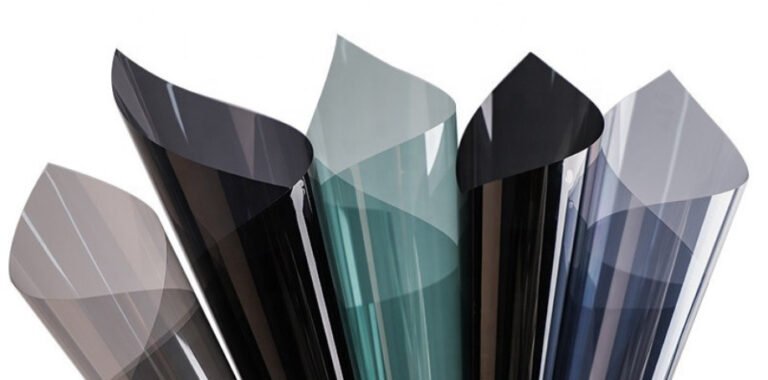
Ceramic window tint, also called ceramic window film or ceramic car tint, contains microscopic ceramic particles that absorb and reflect infrared heat and ultraviolet light, while still letting visible light through. That means a cooler cabin and less sun damage, without needing a very dark shade.
Ceramic tint is one of the most talked-about upgrades for Perth cars, but the technology is often explained poorly. Here is a clear, practical explanation of what is inside the film, what it does on a hot day, and why it is different from carbon and dyed tint.
What is ceramic window tint made of?
A ceramic tint film is a thin, layered polyester film. Inside it sit nano-sized ceramic particles, so small that they do not scatter visible light. Other layers include an adhesive that bonds to the glass, a scratch-resistant outer coating and UV-blocking components. Our Rayno Phantom series is a nano carbon ceramic film, available in the S5, S7 and S9 series.
How does ceramic tint block heat?
Sunlight is made of three parts: visible light, ultraviolet (UV) and infrared (IR). IR is the one you feel as heat.
- **Visible light:** the part you see. Ceramic film lets it through in a controlled amount, called visible light transmission (VLT).
- **Ultraviolet:** the part that fades interiors and damages skin. Our premium films block up to 99.9% of UV.
- **Infrared:** the heat. Ceramic particles absorb and reflect it, and Rayno Phantom S9 can reject up to 93% of IR.
Because the ceramic particles do the heat-blocking, the film does not need to be very dark to work. That is a major advantage under WA’s limits.
How is ceramic different from carbon and dyed tint?
| Film | How it works | Heat rejection |
|---|---|---|
| Dyed | Dye absorbs light and some heat | Lowest |
| Carbon | Carbon particles absorb heat and give a matte look | Good |
| Ceramic | Ceramic particles block IR and UV efficiently | Highest |
Dyed film is mostly about appearance and privacy. Carbon adds real heat reduction and does not fade like cheap dye. Ceramic goes further with the highest infrared rejection. We compare them in more detail on our ceramic tint page.
Does ceramic tint have to be dark?
No, and this is one of its main benefits. Perth’s laws set a minimum VLT, so you cannot go as dark as you like. Under the WA Department of Transport rules, windows forward of the B-pillar need at least 35% VLT, and windows behind the B-pillar need at least 20% VLT if exterior mirrors are fitted on both sides. Film reflectance must be no more than 10%, and the windscreen may only be tinted in the top band. You can check the details on the WA Department of Transport website or in our guide to window tinting laws. Because ceramic film works through the chemistry of the particles, a legal, relatively light shade can still reject a lot of heat.
What difference will I notice in the car?
- A cooler cabin on hot days, and the air conditioner doesn’t have to work as hard
- Less glare from the sun and from other cars
- Reduced fading of the dashboard, seats and trim
- Better comfort on your skin during long drives
- Clear, true visibility with no mirror-like look
Heat rejection does not make your car cold in a hot Perth summer, but it does take the edge off that hot-seat feeling.
Will ceramic tint interfere with phones and GPS?
This is a common worry, since some old metallised films did affect signals. Ceramic and carbon films are non-metallic, so they are designed not to block mobile, GPS or radio signals.
How long does ceramic tint last?
Quality ceramic film is made to last. Our premium films come with a lifetime warranty against peeling, bubbling and fading. How long it looks its best also depends on care. See our guide to window tint longevity for tips.
What happens during installation?
Most cars take two to four hours. The glass is cleaned thoroughly, the film is cut and shaped to each window, and then it is applied and smoothed out. Afterwards, keep your windows up for three to five days and use ammonia-free cleaners. You can read more on our window tinting page.
Is ceramic tint better for the interior of your car?
Yes. UV is the main cause of faded dashboards, cracked trims and tired leather. With up to 99.9% UV rejection, ceramic film shields these surfaces day after day. If you have invested in leather seats, pairing tint with our leather protection gives the cabin a strong defence against Perth’s sun.
Who benefits most from ceramic tint?
- Families with kids in the back seat, where heat builds quickly
- Commuters who sit in traffic on hot afternoons
- Anyone who parks outside at work or at the beach
- Owners of dark-coloured cars, which soak up the most heat
- Drivers who want comfort without a very dark look
Frequently asked questions
Is ceramic tint worth it in Perth?
For most daily drivers, yes. Perth summers are long and hot, and ceramic film gives the most heat rejection.
Does ceramic tint block UV?
Yes. Our premium films block up to 99.9% of UV, protecting both occupants and interior surfaces.
Can ceramic tint be applied over old tint?
No. Old tint should be removed first so the new film sits cleanly. We can remove old tint for you.
Is ceramic tint legal in WA?
Yes, as long as the VLT meets WA limits. Every tint we fit is WA-legal.
See the difference for yourself
Visit 45 Berriman Drive, Wangara or Unit 6/1780 Albany Highway, Kenwick, or call 0482 689 885. You can also contact us online to talk through the right film for your car.