There’s no fixed number. Every paint correction removes a small amount of clear coat, and that layer is thinner than a sheet of paper, so how often it can be done depends on how much is left and how aggressive each correction is. Light polishing can be repeated over a car’s life; heavy cutting should be rare.
That’s the honest answer, and it’s why the best correction is the one that removes the least. Here’s what’s actually happening to your paint, how to tell when there isn’t much left to work with, and how to make one correction last for years.
What does paint correction actually remove?
Factory paint is built in layers: primer, a colour (base) coat, and a clear coat on top. Swirls, light scratches, water spot etching and oxidation mostly sit in that clear coat. Paint correction levels the clear coat down to the bottom of those defects, so the surface is flat again and reflects light cleanly.
The clear coat doesn’t grow back. Whatever is removed is gone, which is why correction only works on defects within the clear coat. A scratch that has gone through to the colour or primer can’t be polished out, however many times you try.
Why each stage matters
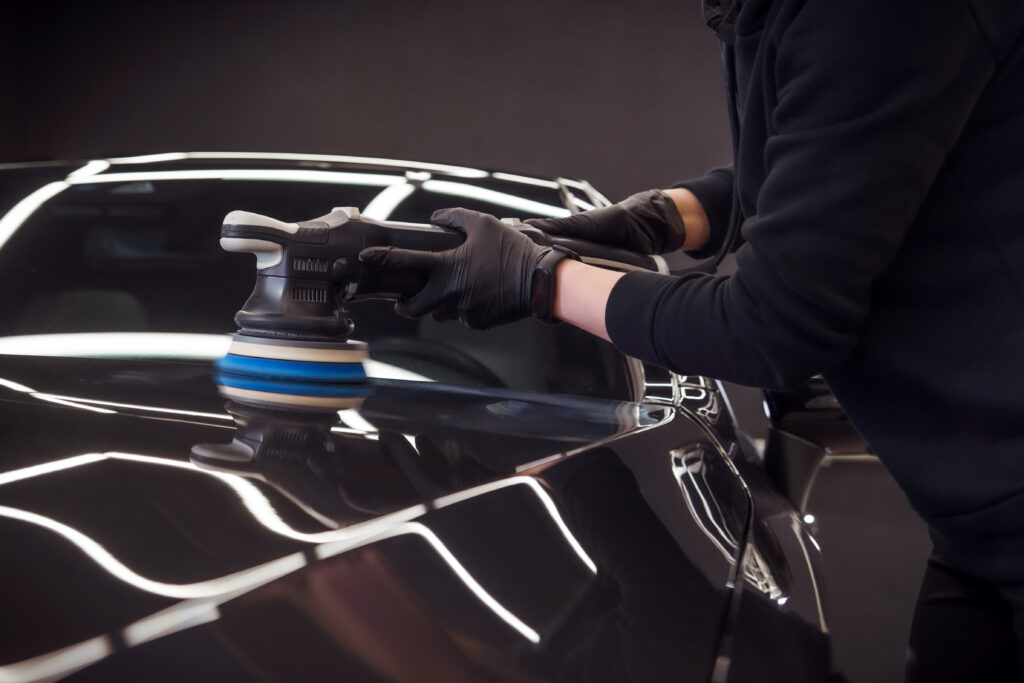
Professional correction is usually done in up to three stages, and each takes off a different amount:
| Stage | What it does | How much it removes |
|---|---|---|
| Cut | Uses a more abrasive compound to level deeper swirls and scratches | The most |
| Polish | Refines the haze and fine marks left by cutting | Moderate |
| Finish | Brings out maximum clarity and gloss | Very little |
Not every car needs all three. A car with light marring may only need a polish and finish, which takes off very little. A neglected car with deep scratches may need a cut first. Taking only what’s needed is the single biggest factor in how many corrections your paint can handle over its life.
How can you tell if the clear coat is getting thin?
A careful detailer measures paint depth before starting, using a gauge that reads total paint thickness on each panel. That reading shows where paint is thinner and where to go gently. As an owner, watch for these warning signs:
- Cloudy or milky patches that don’t polish out, often on the roof and bonnet.
- Clear coat peeling or flaking, which usually starts at an edge and spreads.
- A dull, chalky look on darker colours, even straight after washing.
- The colour coat showing through on edges and body lines, which are naturally thinner and get worn first.
- A history of heavy machine polishing, whether at a detailer or at home.
Once the clear coat is failing, no amount of polishing will save it. At that point the panel needs a respray. Our guide to paint correction vs a respray explains how to tell which one your car needs.
Things that eat into your clear coat faster
Clear coat can be lost in ways that have nothing to do with professional correction:
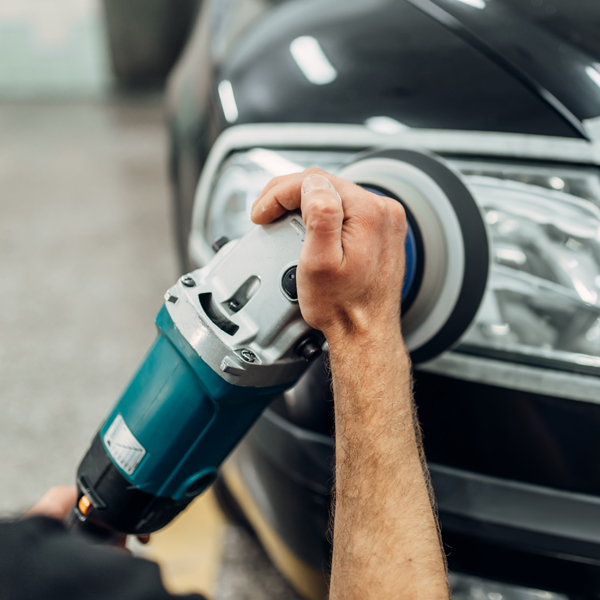
- Aggressive DIY machine polishing. Rotary polishers and heavy compounds can remove a lot of material quickly, especially on edges.
- Repeated “cut and polish” jobs. A heavy cut every year or two to chase new swirls adds up fast.
- Wet sanding. It’s sometimes needed for deep defects, but it removes far more than polishing.
- Harsh sun. Perth’s UV slowly breaks down unprotected clear coat, which is why oxidation is so common on older cars here.
- Resprayed panels. A respray may have a different clear coat thickness from the factory paint around it, so it can behave differently under the polisher.
How do you avoid needing correction again?
The best way to protect your clear coat is to stop the damage that makes correction necessary in the first place. Most swirls are caused by washing, so the routine matters:
- Wash with a pH-neutral shampoo, two buckets and a clean mitt.
- Avoid automatic car washes, as brushes are one of the main causes of swirl marks.
- Dry with clean, soft microfibre towels rather than a chamois that drags grit around.
- Remove bird droppings, sap and bore water spots quickly, before they etch in.
Protection after correction makes the biggest difference. A ceramic coating adds a hard, slick layer that helps the surface resist light marring and chemical etching, and Trident offers 5-year and 10-year coatings. For impact damage like stone chips, paint protection film gives a physical barrier on the panels that cop the most. Either way, the aim is that your next visit is a gentle polish, not another cut.
How long does paint correction take?
Correction is typically a 1 to 3 day job, depending on the size of the car, how many stages it needs and the condition of the paint. Taking that time to work panel by panel is part of what keeps removal to a minimum. You can read more about the process on our paint correction page.
Frequently asked questions
Is paint correction bad for your car?
Not when it’s done carefully. It removes a tiny amount of clear coat, so the risk comes from repeating aggressive cuts too often.
How often should I get my car paint corrected?
Only when defects justify it. With good washing habits and protection, many cars need a heavy correction rarely, if ever again.
Can paint correction remove all scratches?
No. It only removes defects within the clear coat. Scratches that reach the colour coat or primer need touch-up or paintwork.
Does paint correction work on a resprayed car?
Often, yes, but resprayed panels can have different clear coat thickness, so they need extra care and measuring.
Book a paint correction
Visit us at 45 Berriman Drive, Wangara or Unit 6/1780 Albany Highway, Kenwick, or call 0482 689 885 for a quote. You can also browse our work to see recent jobs.