Yes. In WA, the Department of Transport lists sunroofs and other glass in the roof as exempt from the usual tint darkness limits, so roof glass can generally be tinted darker than the side windows. A ceramic film is a popular choice for roof glass, because it takes direct overhead sun and much of that heat arrives as infrared.
Big glass roofs have become common on everything from small SUVs to electric cars and seven-seaters. They make the cabin feel open and bright. In a Perth summer, they can also turn the back seat into a greenhouse, especially in the middle of the day when the sun is almost straight above the car.
Why does a glass roof make the cabin so hot?
Side windows catch the sun at an angle for most of the day. A roof faces it head-on around midday, which is when the sun is strongest. A panoramic roof can also be the single largest piece of glass on the car, and it sits right above passengers’ heads.
Some cars have a solid sliding blind under the roof. Others have a thin mesh shade, and some have no cover at all. Even a good blind only stops heat after it has already passed through the glass, so the space between the glass and the blind still heats up and warms the cabin.
What do WA rules say about tinting roof glass?
The WA Department of Transport’s window tinting bulletin includes “sunroofs and glazings located in the roof of a vehicle” in its list of exemptions from the visible light transmission (VLT) limits. The rest of the car is unchanged:
- Front side windows: at least 35% VLT
- Rear side windows and rear windscreen: at least 20% VLT, when the vehicle has exterior mirrors on both sides
- Windscreen: a tinted band across the top only
- Film reflectance: no more than 10%, so mirror-finish films are out
Our page on window tinting laws in Australia explains how these limits work and how they differ from other states.
Which film suits a sunroof?
Two things are easy to mix up here: darkness and heat rejection. Darkness controls how bright the cabin feels and how much glare comes through. Heat rejection depends on how well the film stops infrared, and that has more to do with the type of film than with how dark it looks.
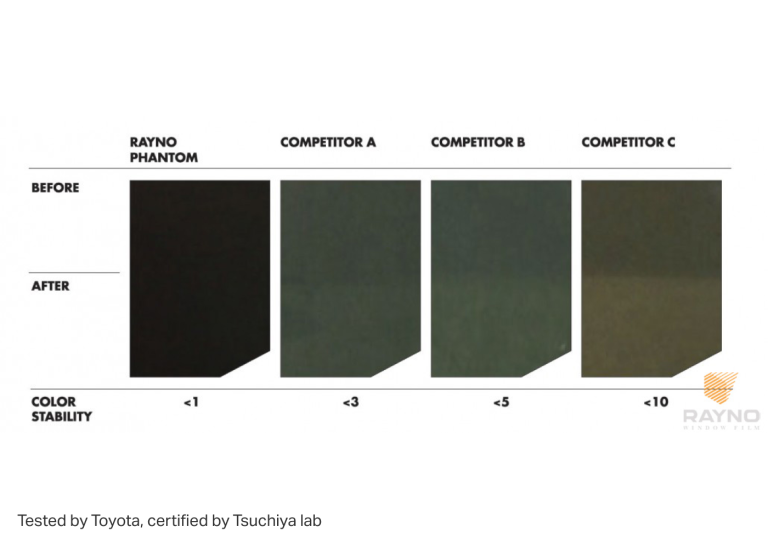
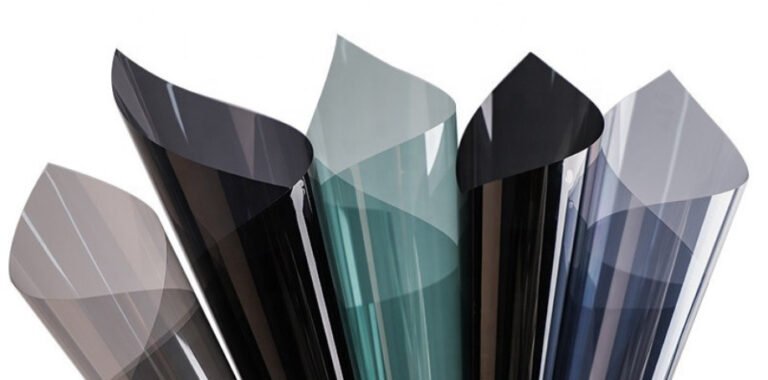
That gives you a choice. A dark film makes a glass roof feel more like a solid roof. A lighter ceramic tint keeps the open, airy feel while still cutting heat. Rayno Phantom nano carbon ceramic film offers up to 99.9% UV rejection, and the Phantom S9 grade rejects up to 93% of infrared, which is the part of sunlight you feel as warmth on your skin.
Does the type of roof make a difference?
| Roof type | What to consider |
|---|---|
| Fixed panoramic glass | Large, often curved panel. Film is applied to the inside surface in one or more pieces depending on size. |
| Sliding or tilting sunroof | The glass panel moves into the roof cavity, so film must be trimmed to clear seals and the mechanism. |
| Roof with a built-in blind | Film reduces the heat that builds up between the glass and the blind, so the blind can stay open more often. |
| Roof glass that’s already very dark from the factory | Extra darkness may add little. A light ceramic film can add heat and UV rejection without changing the look much. |
Many roof panels also have a black dotted border around the edge, sometimes called a frit. Film can be harder to bond evenly across those dots, so a careful installer will trim and finish that edge with extra attention.
How do you look after a tinted sunroof?
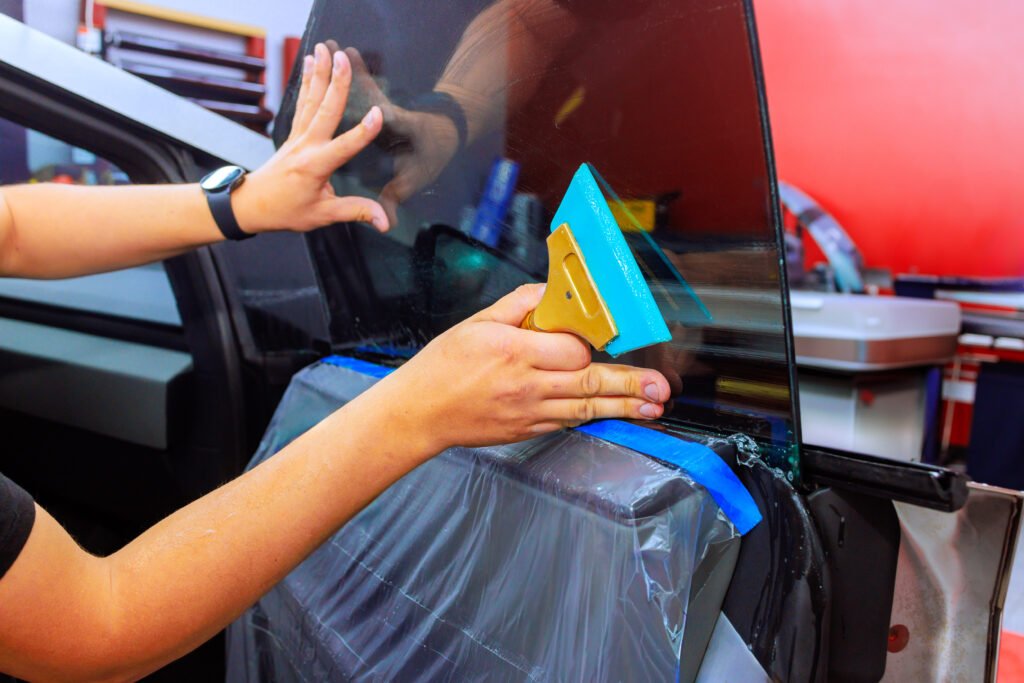
After any car tinting job, windows should stay up for 3-5 days while the film settles. If you have a sliding sunroof, it makes sense to leave it closed for the same period so the edges aren’t disturbed while they bond. After that:
- Clean the inside of the roof glass with an ammonia-free glass cleaner.
- Use a soft microfibre cloth and wipe gently rather than scrubbing.
- Keep roof racks, ski bags and other loads from rubbing the film edge on opening roofs.
Is sunroof tint worth it?
It’s most worthwhile for cars that are parked outdoors, carry passengers in the back on hot days, or have a large glass roof with a thin shade or none at all. Electric cars are a common case: many have full glass roofs, and a cooler cabin means less work for the air conditioning. Our guide to Tesla Model Y window tint looks at one of the best-known examples.
If your roof already has a solid blind that you keep closed, the benefit is smaller, although film can still cut the heat that builds up above the blind. For tinting the rest of the car to match, see our window tinting services.
Frequently asked questions
Is sunroof tint legal in WA?
Yes. The Department of Transport lists roof glass among the exemptions from the VLT limits. The normal limits still apply to the windscreen and side and rear windows.
Can I tint only the roof and leave the windows?
Yes. Each piece of glass is done separately, so you can tint the roof on its own or add the windows later.
Will the roof glass still feel warm?
The glass itself can still get warm in direct sun. The film’s job is to reduce the heat and UV that reach you and the cabin below it.
Can old film on a sunroof be replaced?
Yes. Old tint can be removed and the glass cleaned before new film is fitted.
Cool down your glass roof
To talk through film options for your sunroof or panoramic roof, call 0482 689 885 or visit our workshops at 45 Berriman Drive, Wangara and Unit 6/1780 Albany Highway, Kenwick. You can also request a quote online.