Old window tint should come off when it turns purple, bubbles, peels or makes it hard to see out at night. Professional removal uses heat and steam to release the film and adhesive in one piece, protecting the rear demister lines. Once the glass is clean and free of glue, new film can be fitted.
Tint doesn’t fail overnight. It usually fades slowly, then one summer the rear window starts to blister and the side glass takes on a purple cast. This guide covers the warning signs, why DIY removal often goes wrong, what professional removal involves, and how to choose a replacement film that will last much longer in the Perth sun.
What are the signs your tint needs replacing?
Have a look at your windows in good daylight. Any of these suggest the film has reached the end of its life:
- Purple or brown tinge. Common on cheaper dyed films as the dye breaks down under UV.
- Bubbles or blisters. Usually the adhesive failing, often worst on the rear windscreen where the glass gets hottest.
- Peeling corners and edges. Frequently on windows that wind up and down every day.
- Haze or distortion. A milky look that makes night driving and reversing harder.
- Scratches and creases. From seatbelt buckles, rings or loading gear against the glass.
- The car feels hotter than it used to. Some films lose performance as they age.
Our guide to window tint longevity explains what affects how long film lasts in the first place.
Is it just cosmetic?
Not always. Bubbled or hazy film on the rear windscreen and side windows can reduce how clearly you see other vehicles, cyclists and pedestrians, especially at night or in rain. Old film may also not meet current rules if it was fitted too dark or has been layered.
Why does DIY tint removal often go wrong?
There are plenty of online tricks for removing tint, from hair dryers to ammonia and bin bags in the sun. Some work on a small side window. The common problems are:
| DIY problem | What happens |
|---|---|
| Film tears into small pieces | Hours of picking at fragments with a fingernail |
| Adhesive stays on the glass | A sticky layer that attracts dust and smears |
| Scraping the rear windscreen | Blades can cut or lift the demister lines, leaving them unable to clear fog |
| Harsh chemicals inside the cabin | Fumes, and possible damage to trims, headlining and door cards |
| Water running into door cavities | Can reach window motors and speaker wiring |
The rear windscreen is the one to be most careful with. Demister lines are printed onto the glass, and once they’re damaged the fix is usually expensive.
How does professional tint removal work?
The exact method depends on the age and type of film, but a professional job generally follows these steps:
- Protect the interior. Door cards, seats and the parcel shelf are covered to keep moisture and adhesive off them.
- Heat or steam the film. This softens the adhesive so the film releases evenly, ideally in one sheet.
- Peel slowly. Steady peeling leaves less adhesive behind and avoids tugging at the demister lines.
- Remove the leftover glue. Adhesive residue is dissolved and cleaned off using methods that are safe for the glass and the demister.
- Deep clean the glass. Every trace of residue and dust is removed so the new film bonds properly.
Trident can remove old tint before fitting new film. Very old, brittle film tends to come off in small pieces and takes longer than film that’s only a few years old, which is one reason costs vary.
What should the new film be?
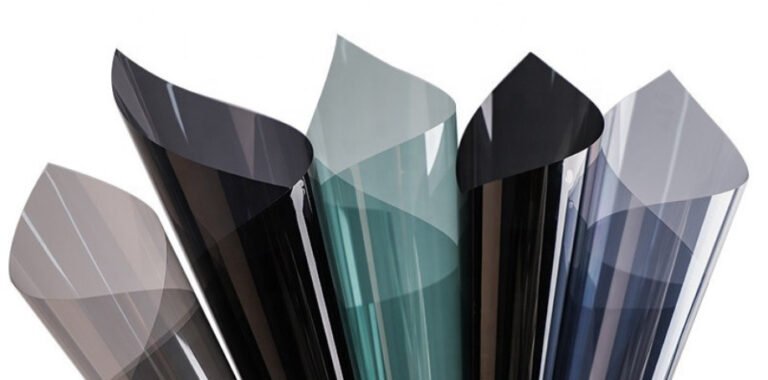
Re-tinting is a chance to avoid the problem happening again. Purple tint is almost always a sign of a dyed film. Modern options don’t rely on dye for colour:
- Dyed film. The most basic option. Looks good when new but is most prone to fading and colour change.
- Carbon film. Holds its colour better and rejects more heat than dyed film.
- Ceramic film. Uses nano ceramic particles to reject heat without metal or dye.
Trident fits Rayno Phantom nano carbon ceramic film in S5, S7 and S9 grades. It’s dye-free and metal-free, with fading under 1%, up to 99.9% UV rejection and, on Phantom S9, IR rejection up to 93%. Premium films come with a lifetime warranty against peeling, bubbling and fading. You can compare options on the ceramic tint page.
Make sure the new shade is legal
If your old tint was very dark, don’t simply match it. In WA, front side windows need at least 35% visible light transmission (VLT). The rear side windows and rear windscreen can be as low as 20% VLT, provided the vehicle has exterior mirrors on both sides. Reflectance can’t exceed 10%, and tint on the windscreen is limited to the top band. These limits come from the WA Department of Transport, and our page on window tinting laws explains them further. Trident fits WA-legal shades.
After the re-tint
Fresh film needs time to cure. Keep the windows up for 3-5 days and clean the glass only with ammonia-free cleaners. A little haze or a few small water pockets in the first days is normal while moisture dries out. For most cars, the tinting itself takes 2-4 hours, with removal time on top.
Frequently asked questions
Can new tint go over old tint?
It’s not a good idea. Layering film traps the old film’s defects, makes the glass darker than you might expect and can push the total below the legal VLT limit.
Will removing tint damage my rear demister?
Careful removal with heat or steam is designed to protect the demister lines. The damage usually comes from scraping with blades or rough handling.
Why has my tint turned purple?
Purple tint is typically a dyed film whose dye has broken down under UV. Dye-free films like Rayno Phantom are built to avoid this, with fading under 1%.
Can I remove tint from just one window?
Yes. If a single window is damaged, that pane can be stripped and re-tinted, though older film on the other windows may look slightly different beside it.
Swap tired tint for film that lasts
If your tint is purple, bubbling or peeling, visit our workshops at 45 Berriman Drive, Wangara or Unit 6/1780 Albany Highway, Kenwick. See our window tinting service for film options, check the FAQs, or call 0482 689 885 for a quote.