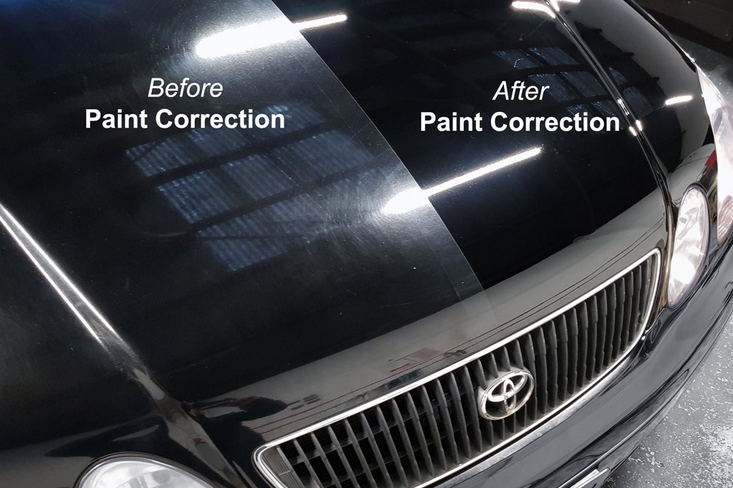
In most cases, yes. A ceramic coating is clear and bonds directly to the clear coat, so it seals in whatever is already there, including swirl marks, holograms and water spots. Correcting the paint first removes those defects within the clear coat, giving the coating a clean surface to bond to and a finish worth locking in.
It’s tempting to skip straight to the coating, especially when the car looks fine from a few metres away. Under a torch or in low Perth winter sun, though, most paint tells a different story. Here’s why the preparation matters, how much correction your car might need, and when you can get away with less.
Why can’t a coating hide paint defects?
A ceramic coating is extremely thin and transparent. It adds gloss, slickness and chemical resistance, but it doesn’t fill scratches the way a glaze or a filler-heavy polish does. If anything, the extra gloss makes existing defects easier to see, because a sharper reflection shows every swirl.
There’s also the bonding to consider. Coatings work best on bare, clean clear coat. Old wax, polish oils and embedded contamination all get in the way. The preparation that comes with paint correction strips these back so the coating can bond properly.
Once a coating has cured, fixing a defect underneath means machine polishing that area, which removes the coating there too. Getting the paint right first is much easier than undoing a coating later.
What does paint correction involve?
Correction is machine polishing that levels the clear coat until defects are removed or reduced. It’s usually done in up to three stages:
| Stage | What it does | Typical defects addressed |
|---|---|---|
| Cut | Uses a more aggressive compound to remove a fine layer of clear coat | Heavier swirls, wash marring, light scratches, oxidation |
| Polish | Refines the surface left by the cut | Haze and fine marks from compounding |
| Finish | Brings up final clarity and gloss | Last traces of haze, ready for protection |
At Trident, correction is done in three stages (cut, polish and finish) and typically takes 1-3 days depending on the paint’s condition. You can read more about the process on the paint correction page.
What paint correction can’t fix
Correction only works within the clear coat. If a scratch catches your fingernail, or you can see a different colour at the bottom of it, it has likely gone through to the base coat or primer. Polishing can soften the look of it but can’t remove it. Stone chips, clear coat failure and deep key marks need touch-up or panel repair instead.
Does a brand new car need paint correction?
Often, yes, though usually less of it. New cars travel from the factory by ship and truck, sit in storage yards, and are often washed by dealer staff before delivery. That can leave:
- Light wash marring from dry towels or brushes
- Water spots from hard water or sprinklers
- Transport adhesive or residue
- Fallout and contamination embedded in the paint
- Occasional sanding marks or factory defects
A new car may only need a single light polish stage before coating. An older daily driver that’s been through years of automatic car washes may need the full cut, polish and finish.
How do you tell how much correction your car needs?
Try this at home before booking:
- Wash and dry the car properly.
- Park it in direct sun, or shine a bright torch across the paint at night.
- Look at the bonnet, roof and doors from different angles.
- Run your fingertips over the paint inside a sandwich bag. If it feels gritty, it has bonded contamination.
Fine circular swirls that follow the light are classic wash marring and respond well to correction. Hazy or chalky patches on red or older paint usually mean oxidation. Isolated deep scratches are the ones to point out, as they may be beyond what polishing can remove.
What’s the right order of work?
A typical sequence before ceramic coating looks like this:
- Thorough wash
- Chemical and clay decontamination
- Masking of trims, badges and rubbers
- Paint correction, from cut through to finish
- Panel wipe to remove polish oils
- Ceramic coating application
- Curing time before the car is washed or driven in the rain
If you’re also adding paint protection film to the front of the car, the paint under the film should be corrected too, because film locks in defects just as a coating does.
Choosing the coating once the paint is right
Trident uses Blask ceramic coatings, with 5-year and 10-year options, detailed on the ceramic coating page. Matte paint is the exception to the correction rule: it can’t be machine polished like gloss paint and needs a matte-specific coating.
If you’re still deciding whether a coating is right for you, our honest look at whether ceramic coating is worth it in Perth covers the pros and cons.
Frequently asked questions
Can I just do a quick polish myself before coating?
You can, but machine polishing removes clear coat, and it’s easy to burn through edges or leave holograms. Any mistakes are then sealed under the coating.
Does paint correction thin the clear coat?
Yes, slightly. That’s why careful correction aims to remove only as much as necessary, and why repeatedly polishing a car over the years isn’t ideal. A coating helps reduce future wash marring, so the paint needs correcting less often.
How long does it take to correct and coat a car?
Paint correction at Trident typically takes 1-3 days, depending on the paint’s condition. Coating application and curing time come on top of that.
Will correction remove stone chips?
No. Chips remove paint rather than marking the clear coat, so they need touch-up. Correction can only improve the surrounding finish.
Get the paint right before you protect it
To talk about paint correction before a ceramic coating, visit us at 45 Berriman Drive, Wangara or Unit 6/1780 Albany Highway, Kenwick, or see finished results on our work page. Call 0482 689 885 to request a quote.