A graphene coating is usually a ceramic coating with graphene added to the formula, not a completely different product. Both bond to your clear coat, add gloss and make the car easier to clean. The difference that matters in Perth comes down to the specific product, how well the paint is prepared and how the car is washed afterwards.
That’s the short version. “Graphene” has become one of the most talked-about words in car care, and it’s easy to come away thinking it has made ceramic coatings old news. It hasn’t. Here’s what graphene coatings actually are, what they claim to do better, and how to decide what suits your car.
What is a ceramic coating?
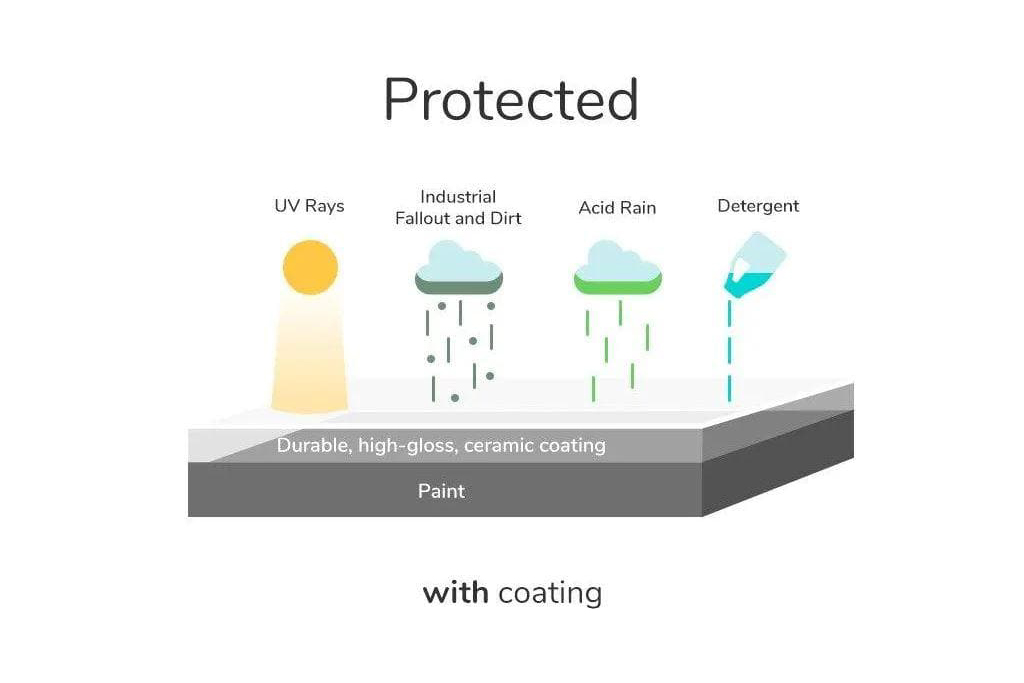
A ceramic coating is a liquid that’s applied to clean, prepared paint and cures into a thin, hard, glass-like layer. Most are based on silica (silicon dioxide, or SiO2). Once cured, the layer is bonded to the clear coat rather than sitting loosely on top like wax.
That layer does a few useful jobs:
- It’s water-repellent, so rain and wash water bead and run off instead of clinging to the paint.
- It resists chemical stains from bird droppings, tree sap and bug splatter better than bare clear coat.
- It adds UV protection, which slows fading and oxidation in strong sun.
- It gives a deep, glossy finish that’s easier to keep clean.
What a ceramic coating doesn’t do is stop stone chips or deep scratches. It’s a thin layer, not a thick film.
What is a graphene coating?
Graphene is a sheet of carbon one atom thick, famous in materials science for its strength and conductivity. You can’t paint a sheet of pure graphene onto a car, though. What’s sold as a graphene coating is normally a coating that contains graphene oxide or reduced graphene oxide mixed into a resin. In many products, that resin is still silica-based, which is why some brands call them “graphene-infused ceramic” coatings.
The amount of graphene in the bottle varies a lot between products, and most manufacturers don’t publish it. So “graphene coating” describes a type of ingredient, not a fixed level of performance.
What do graphene coatings claim to do better?
Manufacturers of graphene products usually point to three main benefits.
Fewer water spots
Water spots form when droplets sit on the paint and dry, leaving minerals behind. Graphene coatings are often marketed as letting water sheet off more readily, so fewer droplets are left to dry. This matters in Perth, where bore water from reticulation can leave orange or white marks on cars parked near sprinklers.
Less heat build-up and less dust
Graphene conducts heat well, and some makers claim their coatings help the surface shed heat and reduce static, so less dust clings to the panels. These are manufacturer claims, and there isn’t much independent testing that compares products in real driving conditions.
Flexibility
Some graphene formulas are said to be less brittle than traditional ceramic layers. Again, results depend on the individual product.
None of these claims are impossible, but they’re mostly marketing claims. A well-made ceramic coating and a well-made graphene coating can perform very similarly, while a poor product of either type will disappoint.
Graphene vs ceramic coating: side-by-side
| Factor | Ceramic (SiO2) coating | Graphene coating |
|---|---|---|
| Base chemistry | Silica-based resin | Usually a resin, often silica-based, with graphene oxide added |
| Track record | Long, widely used by professional installers | Newer, fewer long-term independent results |
| Water behaviour | Strong beading and self-cleaning | Often marketed for sheeting water and fewer spots |
| Chemical and UV resistance | Good, depending on product | Good, depending on product |
| Stone chip protection | Minimal | Minimal |
| Biggest variable | Product quality and paint prep | Product quality and paint prep |
The last row is the important one. Whichever chemistry you choose, the coating locks in whatever is underneath it.
Why does paint prep matter more than the label?
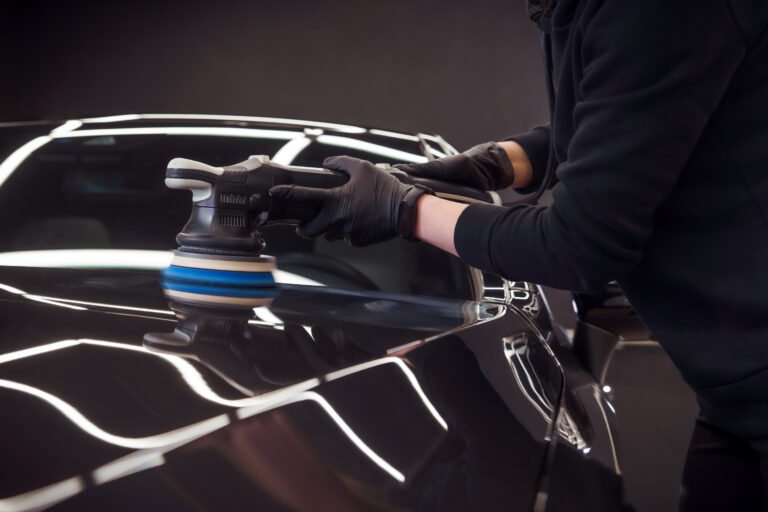
A coating bonds to the clear coat exactly as it is. If there are swirl marks, light scratches or water spot etching, they’ll still be visible after coating, and often look sharper under fresh gloss. That’s why paint is usually decontaminated and machine polished before any coating goes on.
Paint correction at Trident is done in three stages (cut, polish and finish), typically takes 1-3 days, and removes defects within the clear coat only. Damage that has gone through to the colour or primer can’t be polished out, and no coating will hide it.
Which one suits a Perth car?
Instead of starting with the ingredient list, start with how you use the car.
- Parked outside every day: Look for strong chemical resistance and UV protection, because droppings, sap and sun are your biggest enemies.
- Near the coast: Salt residue builds up quickly, so easy rinsing and regular washing matter more than any one ingredient.
- Mostly garaged, weekend use: Gloss and slickness may matter more to you than maximum durability.
- Lots of highway or country driving: A coating won’t stop stone chips. Paint protection film on the bonnet, bumper and mirrors is the better tool for that, and a coating can sit on top.
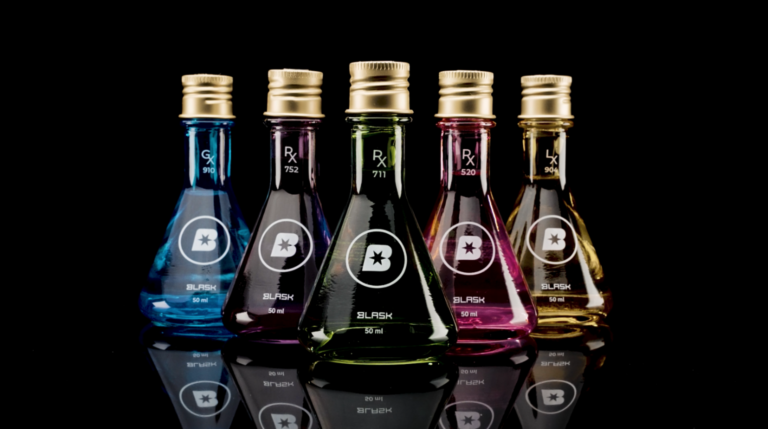
Trident applies Blask ceramic coatings and offers 5-year and 10-year options. Within the range, RX 520 offers balanced chemical resistance, RX 711 is a slick top coat, and GX 910 is a coating for glass. You can read more on the ceramic coating Perth page.
How do you look after either coating?
Graphene and ceramic coatings are looked after the same way. The habits that make the biggest difference are simple:
- Wash with a pH-neutral shampoo. Strong alkaline or acidic cleaners wear the coating faster.
- Avoid automatic car washes. Brushes and harsh chemicals put fine scratches into the surface.
- Rinse off bird droppings, sap and bore water marks quickly, especially in summer heat.
- Dry with a clean microfibre towel or air blower rather than letting water evaporate on the paint.
If you’re not sure whether an existing coating is still working, our guide to the signs your ceramic coating is wearing off explains what to look for.
Frequently asked questions
Is graphene coating better than ceramic coating?
Not automatically. Graphene is an added ingredient, and the overall product quality, the paint prep and your washing habits matter more than whether graphene is on the label.
Does a graphene coating stop water spots completely?
No coating stops them completely. Any water that dries on the paint can leave minerals behind. A good coating makes spots easier to remove, but quick drying is still the best defence.
Can graphene or ceramic coating protect against stone chips?
Not in any meaningful way. Both are very thin layers. Paint protection film is designed for impact protection, and it can be combined with a coating.
Can you put a graphene coating over a ceramic coating?
Layering different products isn’t straightforward, because a new coating needs a clean, bare surface to bond to. It’s usually better to choose one system and prepare the paint properly for it.
What affects the cost of a coating?
The size and condition of the car, how much paint correction is needed, and the length of protection you choose all play a part. The best way to know is to get a quote for your car.
Book a ceramic coating in Perth
To talk through the right coating for your car, visit 45 Berriman Drive, Wangara or Unit 6/1780 Albany Highway, Kenwick, or call 0482 689 885. Both workshops are open Monday to Friday 8am-5pm and Saturday 8am-2pm.