In WA you can’t put tint film across your whole windscreen, but a tinted strip along the top is allowed. The WA Department of Transport says the band must sit above the area your wipers sweep, stay out of your main line of sight, and cover no more than 10% of the windscreen.
That one rule trips up a lot of drivers. Some think any windscreen tint is illegal, while others see darker bands on imported cars and assume they can go as deep as they like. Here’s what the rule actually says, how a visor strip helps with glare, and what to check before you get one.
What does WA law say about windscreen tint?
The rules sit in the WA Department of Transport’s window tinting bulletin (IB-119). For windscreens, it sets three conditions on a tinted band:
- Position: the band must be above the part of the windscreen swept by the wipers.
- Sight line: it must not intrude into the primary vision area, which is the part of the glass you look through to drive.
- Size: the band can’t take up more than 10% of the windscreen area, unless the department’s Vehicle Safety and Standards section has given written permission.
Apart from that band, film must not be applied to the windscreen at all. The bulletin also caps the reflectance of tint film at 10%, so a mirror-like strip is out even if it sits in the right place.
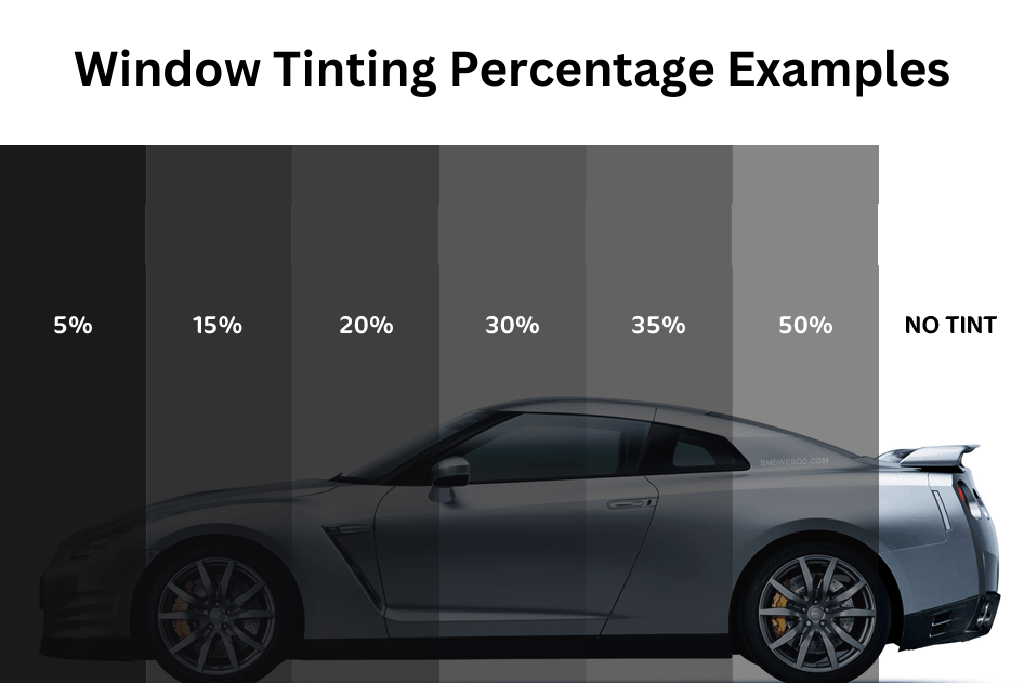
For the rest of the car, front side windows need at least 35% visible light transmission (VLT). Rear side windows and the rear windscreen can go to 20% VLT, as long as the vehicle has exterior rear-view mirrors on both sides. Our page on window tinting laws in Australia covers how these limits compare across the country.
How big can a windscreen tint strip be?
There’s no single measurement that suits every car, because windscreens and wiper arcs vary so much. The two limits work together, and whichever one is smaller wins.
| Check | What it means in practice |
|---|---|
| Wiper sweep | Run the wipers and note the highest point they reach. The band has to finish above that line. |
| 10% of the area | On a steeply raked windscreen, 10% may still leave a decent strip. On an upright windscreen, such as on many vans and 4WDs, it can be narrow. |
| Primary vision area | Even within the first two limits, the strip must not drop into your view of the road. |
| Factory shade band | Some windscreens already have a tinted or dotted section at the top. Film added over it still has to fit the limits above. |
On some cars the wipers reach almost to the top of the glass, which leaves very little room for a legal strip. In that case a band may not be worth doing.
Does a visor strip actually reduce glare?
It helps, but only with sun that sits above your line of sight. A strip cuts the harsh light coming through the top of the glass when the sun is reasonably high, and it can make the cabin feel less like a fishbowl on a bright day.
It does far less when the sun is low. Driving east first thing in the morning or west in the late afternoon, the sun sits right in your field of view, which is below the band. In those conditions your sun visor, a good pair of polarised sunglasses and a clean windscreen do more work than any strip can.
So think of a visor strip as a comfort extra rather than a glare fix. If glare is your main complaint, keeping the inside of the windscreen clean is often the bigger win, because a film of grime scatters low sunlight and makes it worse.
Will a tint strip interfere with cameras and sensors?
Many newer cars house a forward camera, rain sensor or light sensor behind the rear-view mirror, right at the top of the windscreen. That’s exactly where a visor strip goes, so it needs care:
- The film should be trimmed around the camera housing so nothing sits in front of the lens.
- Rain and light sensors work by looking through the glass, so covering them can affect auto wipers and auto headlights.
- If your car has a head-up display, check that the strip stays well clear of where the image is projected.
Your owner’s manual usually shows where these components sit. If you’re unsure, raise it before any film goes on, not afterwards.
What shade and film should you choose?
Most drivers pick a darker shade for a strip than they use on the side windows, because it’s only there to block overhead sun. Remember the 10% reflectance cap applies, so mirrored or chrome-look films aren’t an option.
The type of film matters too. A ceramic film, such as the Rayno Phantom range, blocks heat as well as light, so a strip in ceramic film adds a little to cabin comfort on top of reducing brightness. It also contains no metal, so it won’t affect phone signals or GPS. If you’re tinting the side windows at the same time, matching the strip to the same film keeps the look consistent. Our ceramic tint page explains how the Phantom films handle heat and UV.
Can you get a tint strip added on its own?
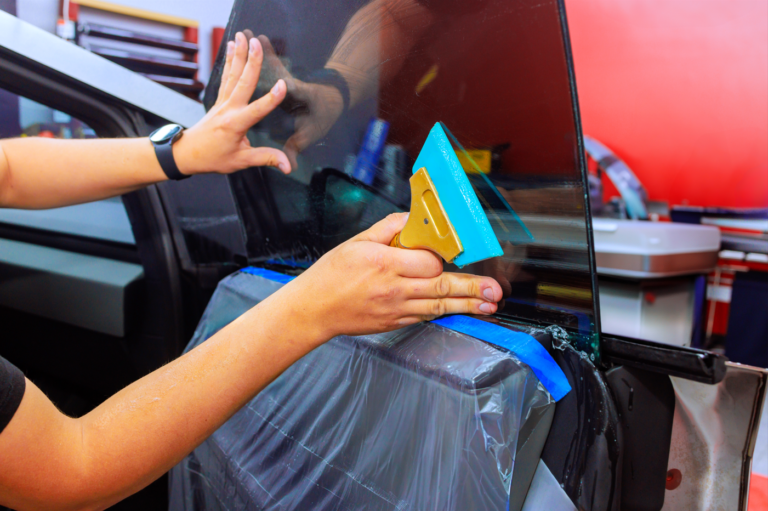
Yes. A visor strip can be added to a car that’s already tinted, or done as part of a full tint job. Because the windscreen is a large, curved piece of glass, the film has to be shaped carefully so it sits flat without lifting at the edges.
If your car already has a strip that looks too deep, or it’s bubbling and peeling, the old film can be removed and replaced with one that fits within the limits. Our article on whether your window tint is legal in WA explains what happens if a vehicle is found with non-compliant tint.
Frequently asked questions
Is a windscreen tint strip legal in WA?
Yes, as long as it sits above the area swept by the wipers, stays out of your primary line of sight and covers no more than 10% of the windscreen.
Can I tint my whole windscreen in WA?
No. Apart from the top band, the WA Department of Transport bulletin says film must not be applied to the windscreen.
Will a visor strip stop sunrise and sunset glare?
Not much. Low sun sits below the band, so your visor and sunglasses still do most of the work at those times of day.
Can a tint strip affect my car’s safety cameras?
It can if it covers them. The film needs to be trimmed around any camera or sensor behind the rear-view mirror.
Get a legal windscreen strip fitted
Trident Car Care fits WA-legal shades using Rayno Phantom ceramic film, with a lifetime warranty against peeling, bubbling and fading on premium films. See our window tinting service, then visit us at 45 Berriman Drive, Wangara or Unit 6/1780 Albany Highway, Kenwick, or call 0482 689 885 for a quote.