To protect leather car seats from the Perth sun, keep UV and heat off them and keep the surface clean. Window tint that blocks UV, a sunshade and shaded parking slow fading and drying. Regular gentle cleaning removes the oils and grit that wear the finish. A protective leather coating adds a barrier against spills and dye transfer.
Leather seats are one of the first things to show a car’s age. In Perth, where cars sit in open car parks under strong sun for much of the year, the bolsters and the tops of the rear seats can fade, dry out and start to crease long before the rest of the car looks tired. The good news is that most of that wear is preventable.
What actually damages car leather?
It helps to know what you are protecting against. Most modern car leather has a pigmented, protective top finish over the hide. That finish is what wears, not usually the leather underneath, at least at first. The usual culprits are:
- UV light. Over time, UV breaks down the colour and the top finish, which is why seats nearest the windows fade first.
- Heat. A closed car on a summer afternoon gets far hotter inside than the air outside. Repeated heating dries the leather and makes the finish more brittle.
- Body oils, sweat and sunscreen. These build up on the seat surface, especially on the driver’s seat and headrests, and slowly soften and discolour the finish.
- Friction and grit. Sliding in and out of the driver’s seat, especially in work clothes, rubs fine grit into the side bolster.
- Dye transfer. New jeans and some dark fabrics can leave a blue or grey tinge on cream and light grey leather.
What are the signs your leather needs attention?
Leather rarely fails overnight. Catching it early makes a big difference to what can be done. Look for:
| What you notice | What it usually means |
|---|---|
| Seats look shiny or greasy | Built-up body oils and grime on the surface |
| Colour looks patchy near the windows | UV fading of the top finish |
| Fine creases on the driver’s bolster | Wear from getting in and out, often made worse by dry leather |
| Blue tinge on light seats | Dye transfer from clothing |
| Cracks you can feel with a fingernail | The finish has broken down; protection alone will not reverse it |
If your seats are already cracked or the colour has worn through, a coating will not hide that. At that point, repair or refinishing by a leather specialist is the answer. Protection is about keeping good leather good.
How does window tint help protect leather?
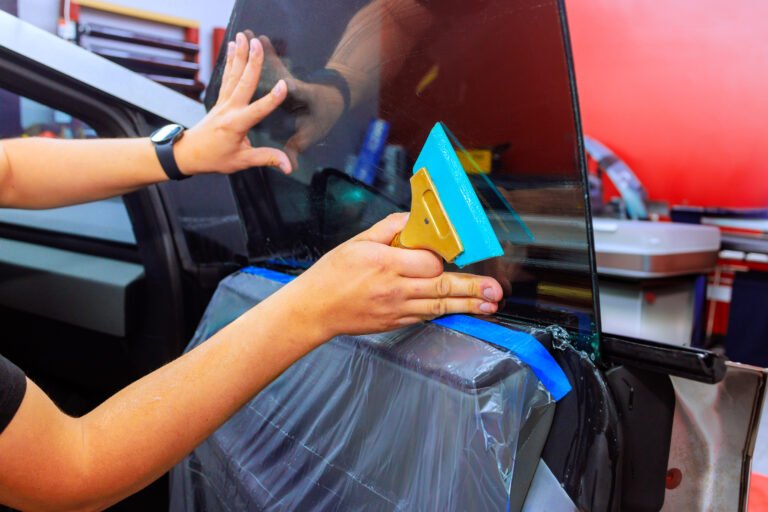
Tint is the one step that works on the seats all day, every day, without you having to remember it. Because UV is a major cause of fading, blocking it at the glass takes away much of the damage before it reaches the leather.
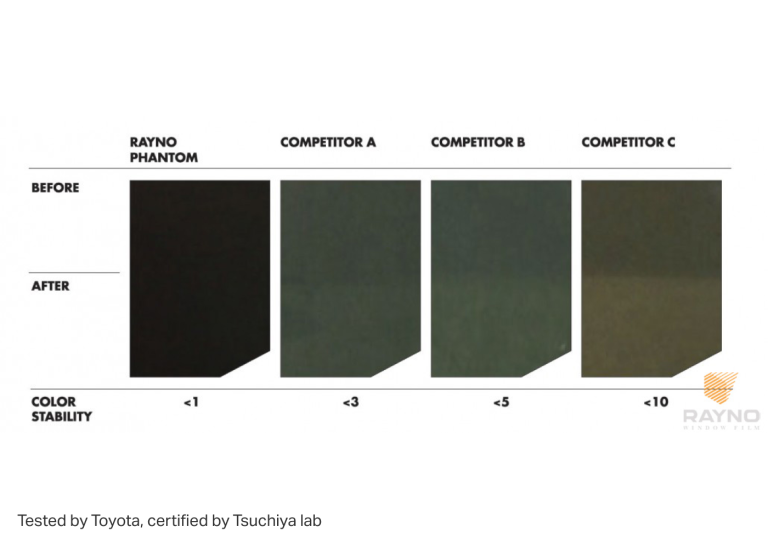
Trident fits Rayno Phantom nano carbon ceramic film, which rejects up to 99.9% of UV. The higher grades also reject a large share of infrared, the heat you feel, with the Phantom S9 rejecting up to 93%. Less heat in the cabin means the leather is not being baked every time the car is parked. Our article on how ceramic window tint works explains the science, and the window tinting page covers the film range.
Keep in mind that tint has to stay within WA’s legal limits, which are set by the WA Department of Transport. A legal film does not need to be very dark to block UV effectively, because UV rejection comes from the film’s technology rather than its shade. See the ceramic tint page for how that works.
How should you clean leather seats?
Gentle and regular beats harsh and occasional. A simple routine for most cars:
- Vacuum the seats first, using a soft brush attachment to get grit out of the seams.
- Use a cleaner made for automotive leather, applied to a soft brush or microfibre cloth rather than sprayed straight onto the seat.
- Work in small sections, paying attention to the bolsters, headrests and the top of the seat back.
- Wipe off the residue with a clean, slightly damp microfibre cloth.
- Let the seats dry naturally, out of direct sun.
Avoid household products like all-purpose sprays, dishwashing liquid, alcohol wipes and anything containing bleach. They may get the seat clean, but they can strip the protective finish and leave the leather more exposed than before.
How often should you clean them?
For a car used every day, a light wipe-down every couple of weeks and a proper clean every couple of months is a sensible rhythm. Cars that carry kids, pets or people coming straight from work or the beach will need it more often.
What does a leather coating add?
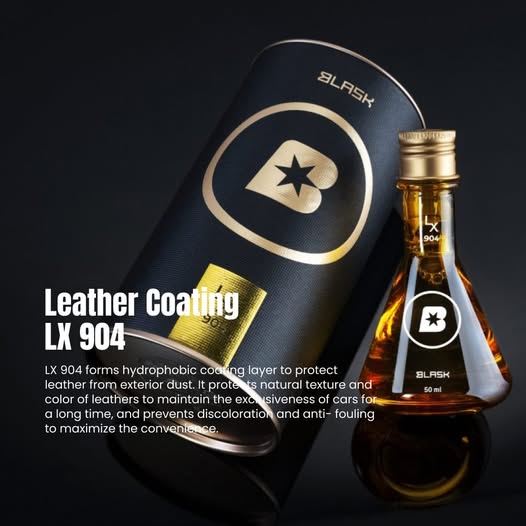
Conditioners and protectants from the supermarket shelf tend to sit on the surface and wear off quickly. A nano-ceramic leather coating is different: it bonds to the finish and forms a thin, invisible protective layer. The practical benefits are that spills bead up instead of soaking in, dye transfer from clothing is easier to wipe away, and everyday grime does not grind into the surface as easily.
Trident uses Blask LX 904, a nano-ceramic leather coating, as part of its leather protection service. The seats should be thoroughly cleaned before any coating goes on, because whatever is on the surface at the time gets sealed in.
Simple habits that make a difference
- Use a windscreen sunshade whenever the car is parked in the open.
- Choose covered or shaded parking when you can, even if it means a slightly longer walk.
- Keep a microfibre cloth in the car to wipe off sunscreen and spills straight away.
- Be careful with sharp objects in back pockets, tools and pet claws.
Frequently asked questions
Does leather need conditioning in a hot climate?
Leather that is cleaned and protected from UV and heat dries out far more slowly. Use a product made for automotive leather if you condition, and avoid greasy products that leave the seats slippery or shiny.
Will a coating change how my seats look or feel?
A quality leather coating is designed to be invisible and to keep the natural look and feel of the leather, without adding shine.
Can I use a leather coating on synthetic leather?
Many modern cars use synthetic leather or a mix of materials. It is best to confirm what your seats are made of before choosing any cleaner or coating.
Is tint alone enough to protect my seats?
Tint deals with UV and heat, but not spills, oils, friction or dye transfer. That is why tint and a leather coating work well together.
Look after your leather
Trident Car Care has workshops at 45 Berriman Drive, Wangara and Unit 6/1780 Albany Highway, Kenwick, open Monday to Friday 8am-5pm and Saturday 8am-2pm. Call 0482 689 885 or send an enquiry about leather protection and window tint for your car.