Toyota Prados and LandCruisers follow the same WA tint rules as any passenger vehicle. That means at least 35% light on the front door windows, and down to 20% on everything behind the B pillar because they have exterior mirrors on both sides. For long, hot touring days, a ceramic film’s heat rejection matters more than how dark it looks.
Big Toyotas are a common sight around Perth, whether they’re towing a van down to the South West, heading up the coast to Exmouth, or doing the school run in the northern suburbs. They also have a lot of glass, and a lot of it faces the sun for hours at a time. This guide covers what owners of a Prado, LandCruiser 300 Series or 70 Series wagon should know before tinting.
Why does tint matter more in a touring 4WD?
A sedan doing short city trips spends most of its day parked. A touring 4WD can spend eight or nine hours a day on the road, often driving north with the sun beating through one side of the car. Three things stand out:
- Heat on one side. On a long run up the North West Coastal Highway, the passengers on the sunny side cook while the other side is fine. Heat-rejecting film evens that out.
- Third-row passengers. In seven-seat versions, the people in the back row sit beside the rear quarter glass, often with less air-con flow than the front seats.
- Gear in the cargo area. Fridges, food, camera gear and phones charging in the back all sit behind a large expanse of glass. Keeping that area cooler reduces the load on a 12-volt fridge and keeps electronics happier.
What are the legal limits for a Prado or LandCruiser in WA?
The WA Department of Transport window tinting bulletin (IB-119D) sets out the following:
- Windscreen: no film, other than a band across the top that sits above the wiper sweep and covers no more than 10% of the windscreen.
- Front door windows: at least 35% visible light transmission (VLT), measured through glass and film together.
- Rear door windows, rear quarter windows and rear glass: at least 20% VLT, provided the vehicle has exterior mirrors on both sides.
- Reflectance: no more than 10%, so mirrored films are not allowed.
- Sunroofs and glass in the roof are listed as exempt from the limits.
Our page on window tinting laws goes through the rules in more detail, including how VLT is measured.
What if my rear glass is already very dark?
Some Prados and LandCruisers come with factory privacy glass on the rear windows. If that glass is already below 20% VLT, adding film would normally take it further under the limit. The bulletin says the Department of Transport may grant an exemption on a case-by-case basis to allow film below 20% behind the B pillar, but only to match the existing privacy glass. No exemption is available for the front glass on these grounds.
If your rear glass is already that dark, one straightforward option is to tint only the front door windows with a legal 35% film, so the front and rear look more even without putting the rear glass out of bounds. Either way, the glass should be checked before a shade is chosen.
Is ceramic or carbon film better for a big 4WD?
Both are a big step up from cheap dyed films, which can fade and turn purple after a few Perth summers. The difference comes down to heat. Carbon film is a solid all-rounder. Ceramic film is built to reject more infrared heat, the part of sunlight you feel on your skin, without needing to be darker.
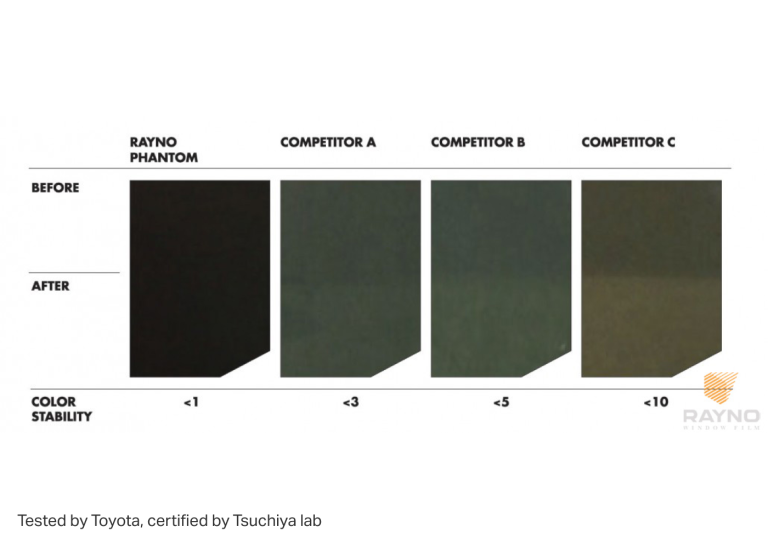
For a vehicle that spends long days in the sun, that difference counts. The Rayno Phantom film fitted at Trident is a nano carbon ceramic film offered as S5, S7 and S9. Each grade rejects up to 99.9% of UV, and the Phantom S9 rejects up to 93% of infrared. Because the film is dye-free and metal-free, it fades by less than 1% and doesn’t interfere with UHF, phone or radio reception the way metallic films can. Read our comparison of carbon vs ceramic tint, or see the ceramic tint page for more detail.
Does the model change how the job is done?
The rules are identical, but the glass is not. Each of Toyota’s big four-wheel drives brings its own quirks:
| Model | Glass worth knowing about |
|---|---|
| Prado (including the 250 Series) | Large rear quarter windows behind the rear doors, which are worth tinting for third-row passengers |
| LandCruiser 300 Series | Big, tall side glass and a large tailgate window with demister lines |
| LandCruiser 70 Series wagon | Flatter, more upright glass, and more of it facing the sun side-on on a long run |
Older vehicles may also arrive with tired tint from a previous owner. That old film can be stripped off before new tint goes on. Removal is worth doing properly, because old adhesive left on the glass will show through the new tint.
Planning tint around a trip
If your tint is being done before a big trip, give yourself some breathing room. Most cars take 2-4 hours to tint, but the film then needs 3-5 days with the windows kept up while it cures. Driving on dusty, corrugated roads with the windows down in that period is asking for trouble.
A simple plan:
- Book the tint at least a week before you leave.
- Keep the windows up for 3-5 days after fitting, even on hot days.
- Use an ammonia-free cleaner on the glass once it has cured; avoid scraping red dust off with anything abrasive.
- Check the film edges when you’re home, especially on doors that see a lot of opening and closing.
Frequently asked questions
Can I tint the windscreen on my LandCruiser?
Only the top band, above the area the wipers sweep and no more than 10% of the windscreen. Full windscreen tint is not permitted in WA.
Will darker tint make reversing a van harder at night?
It can. If you reverse a caravan or boat often after dark, a lighter shade on the rear glass helps you see out. Your side mirrors are what really matter when reversing a trailer, and those are unaffected.
Does tint help with the air-con on a long drive?
A good heat-rejecting film reduces how much heat comes through the glass, so the cabin stays more comfortable and the air-con doesn’t have to work as hard, particularly for rear passengers.
Does tint protect my skin on a long drive?
Yes. Rayno Phantom film rejects up to 99.9% of UV, and the Department of Transport bulletin itself notes that film attached to glass will usually cut the UV coming through to less than 1%. That matters on a full day behind the wheel with the sun on your arm.
Get your Prado or LandCruiser tinted
Trident Car Care fits WA-legal shades at 45 Berriman Drive, Wangara and Unit 6/1780 Albany Highway, Kenwick. If you’re north of the river, see the Wangara workshop page. Call 0482 689 885, or browse our recent work before you book.